

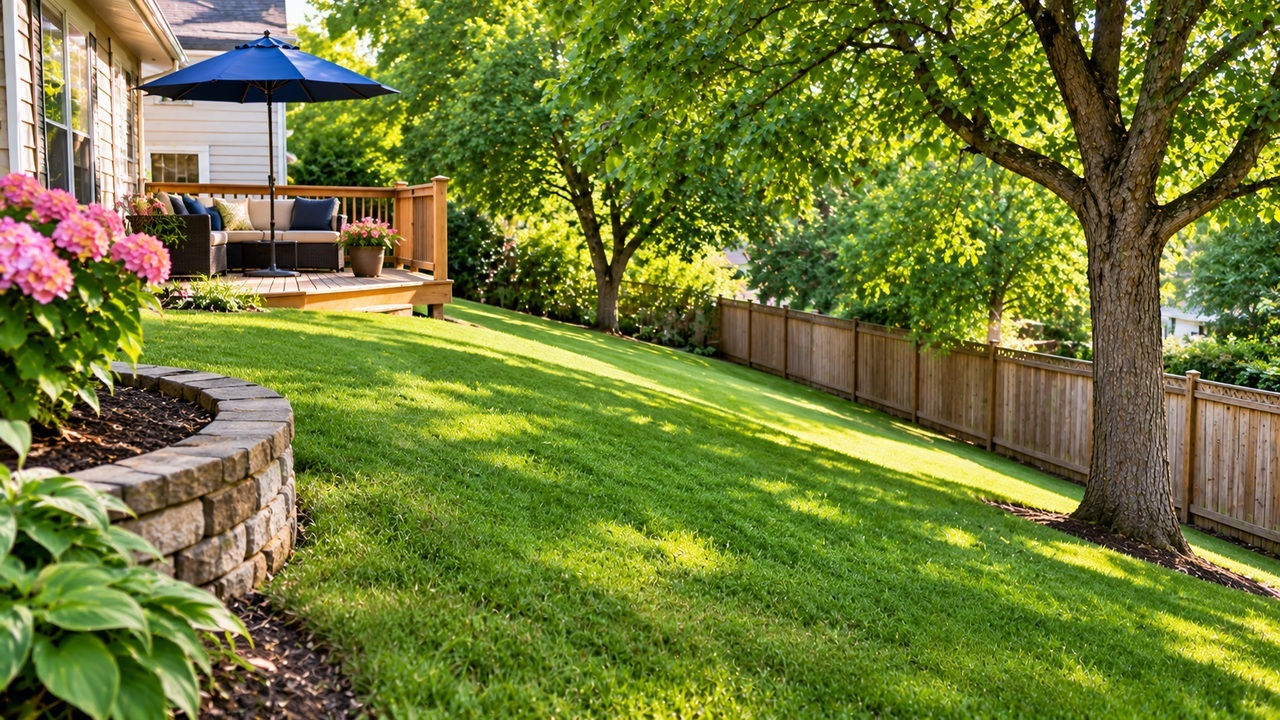
 A backyard can look beautiful during a showing, especially when the grass is freshly cut and the landscaping is tidy. But one detail deserves a closer look before you make an offer: which direction does the ground slope? The answer can affect drainage, maintenance, and how comfortably you use the outdoor space.
Where Water Is Likely to Travel
Rainwater follows the grade of the land. A yard that slopes gently away from the house may help move water toward an appropriate drainage area. A yard that slopes toward the foundation can create concerns if runoff collects near walls, patios, or basement openings. Standing water after a storm can also make parts of the yard difficult to use. A dry, sunny showing will not always reveal these issues.
Look Beyond the Grass
Walk the perimeter and look for low spots, washed-out mulch, exposed roots, soil piled against siding, and staining on exterior walls. Check whether downspouts discharge near the foundation or direct water away from the home. Notice neighboring properties, too. Water from an uphill lot may flow toward the property you are considering. Retaining walls, drains, and swales may help manage runoff, but their condition and maintenance requirements matter.
Think About Everyday Use
Slope also affects what you can do with a yard. A steep section might limit where you place a playset, garden beds, outdoor furniture, or a future patio. Leveling ground or building a retaining wall can be expensive and may require permits. If you are imagining a pool, accessory structure, or major landscaping project, ask a qualified contractor about feasibility before relying on that plan.
Ask Questions Before Closing
Visit after rainfall if possible, review available disclosures, and ask whether the seller has experienced pooling or drainage repairs. Your home inspector may identify visible concerns, but significant grading or water-management questions may call for a drainage specialist or engineer. Also check local rules before changing runoff patterns, since directing water onto a neighbor’s property can create problems.
A sloped yard is not automatically a bad yard. The goal is to understand how the property handles water and whether its layout fits your plans. A few extra minutes studying the ground can help you make a more informed decision about the home you are buying.
