

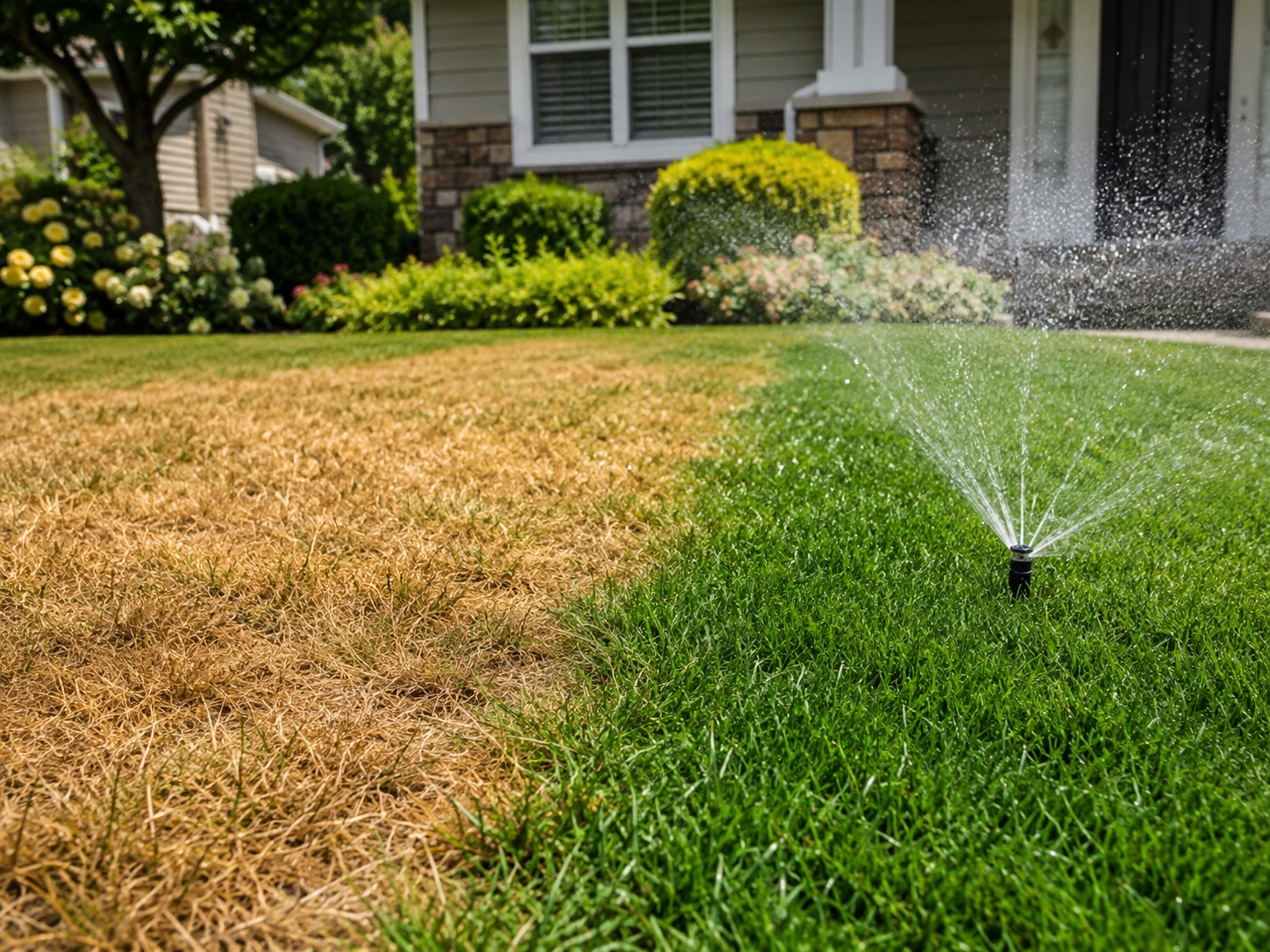
 A healthy green lawn can quickly turn brown during the hot summer months. While extreme heat is often blamed, it’s not always the only reason your grass may start to lose its color.
The good news? A brown lawn is not always a dead lawn. In many cases, your grass may simply be stressed or dormant, and with the right care, it can bounce back.
What Causes a Lawn to Turn Brown?
One of the most common reasons for a brown lawn is drought stress, which happens when grass does not receive enough moisture during periods of hot or dry weather.
When grass experiences drought stress, it may enter dormancy as a survival mechanism. A simple way to check is the “footprint test.” Step onto a brown area of your lawn, and if your footprint remains visible instead of the grass springing back up, your lawn may need more water.
Drought-related brown patches often appear unevenly throughout the yard. This is different from brown areas caused by sprinkler problems, drainage issues, or areas receiving different amounts of sun exposure.
Other Reasons Your Lawn May Be Turning Brown
A lack of water isn’t the only possible cause. Brown grass can also result from:
- Sprinkler issues: Uneven coverage can leave certain areas thirsty while others receive plenty of water.
- Lawn pests: Insects such as grubs or chinch bugs can damage roots and weaken grass.
- Weeds: Invasive plants compete with your grass for nutrients, sunlight, and water.
- Mowing too short: Cutting grass too low can increase stress by removing the natural shade grass blades provide.
- Overwatering: Too much water can contribute to shallow roots, disease, and unhealthy growth.
- Soil problems: Compacted soil may prevent water and nutrients from properly reaching the roots.
If a lawn has been dormant or damaged for an extended period of time, certain areas may need reseeding or additional care to fully recover.
Start by identifying the likely cause before applying treatments. If drought stress is the issue, begin with consistent deep watering rather than frequent shallow watering. Many lawns benefit from about one inch of water per week, including rainfall, but exact needs vary depending on your climate and grass type.
A brown lawn can be frustrating, but it does not always mean starting over. With patience and the right care, many lawns can recover and become healthy and green again.
