

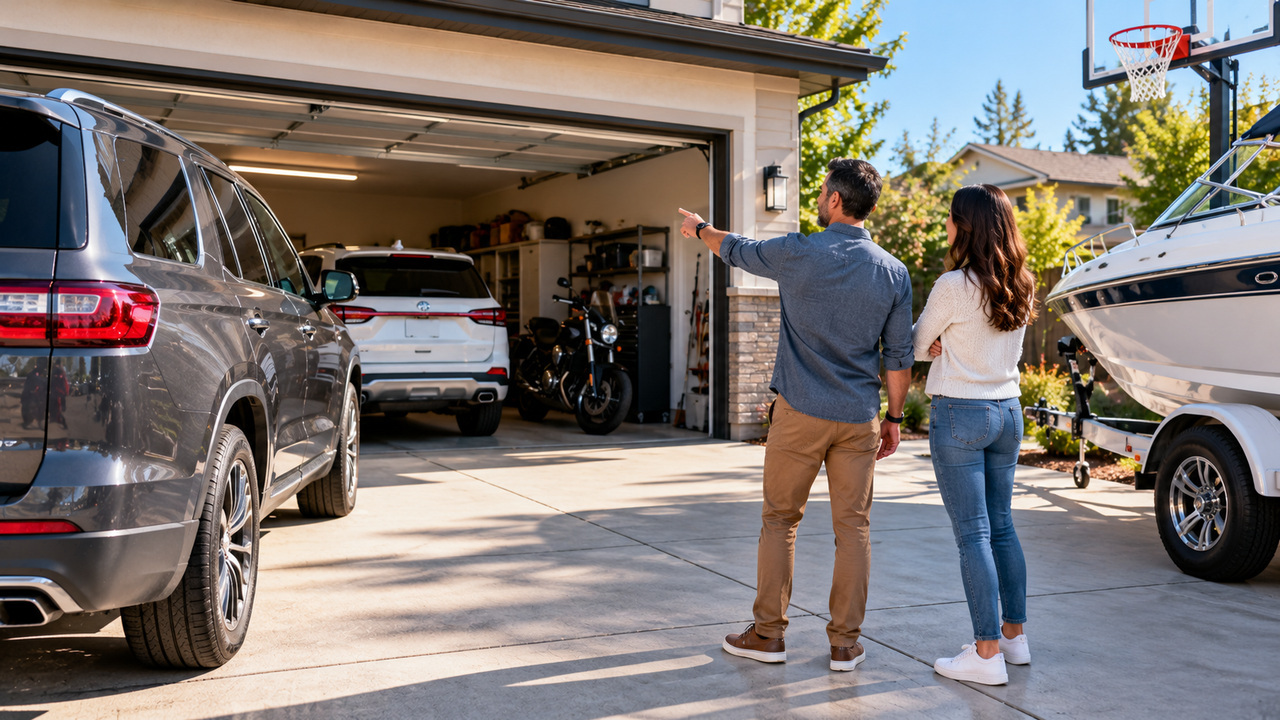
 A listing that advertises a two-car garage may sound like a perfect match for a two-car household. But the number of garage doors does not always tell you whether your vehicles will fit comfortably. Before buying, it is worth testing the parking setup as carefully as you test the home’s interior layout.
Garage Capacity Is More Than a Label
Garages vary in width, depth, ceiling height, and door clearance. A space designed decades ago may not accommodate today’s larger trucks or SUVs as easily as buyers expect.
Storage shelves, water heaters, steps, and other features can reduce usable space. Even when two vehicles fit inside, there may not be enough room to open the doors without squeezing past walls or another car.
Measure your vehicles and compare those dimensions with the garage’s clear interior space. Include mirrors, roof racks, and any equipment that adds height.
Try the Driveway Approach
The driveway matters as much as the garage itself. A steep slope, narrow turn, or short approach can make parking awkward.
Look at whether a vehicle can enter and exit without scraping, blocking a sidewalk, or requiring repeated adjustments. If you have a trailer, motorcycle, or recreational equipment, consider how those items will be maneuvered and stored.
A driveway that looks spacious in photographs may feel much tighter when cars are actually parked there.
Think About Daily Routines
Ask yourself how many times each day vehicles will move in and out. Will one driver need to move a car before the other can leave? Is there room for guests, deliveries, or a teenager’s future vehicle?
If the household uses the garage for storage, hobbies, or a workshop, those activities compete with parking space. A garage that technically fits two cars may function better as a one-car garage with storage.
Understand Street Parking Rules
Do not assume street parking will solve every problem. Homeowners associations, municipalities, and neighborhood regulations may restrict overnight parking, commercial vehicles, or certain types of recreational equipment.
Visit at different times if possible to see how crowded nearby streets become. Also check whether nearby curbs, hydrants, or narrow roads limit available spaces.
The best parking arrangement is one that supports your actual vehicles and daily habits. Bringing measurements and asking practical questions before making an offer can prevent a frustrating surprise after move-in.
